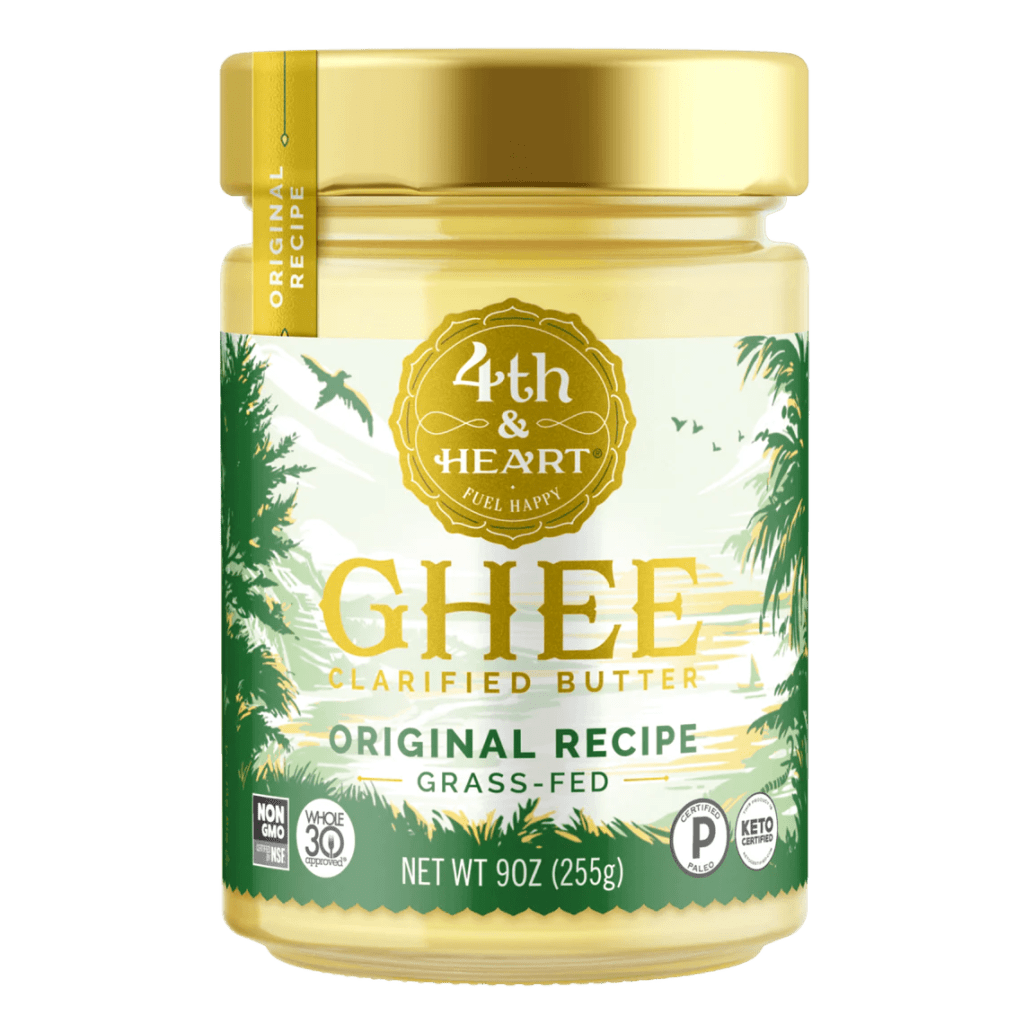
Ever heard of ghee? I hadn’t either until about a year ago! My favorite is the 4th & Heart Ghee
Ghee is a clarified butter. Clarifying butter is the process of heating it to a certain temperature in order to evaporate any extra water in the butter. This leaves you with a richer, fattier butter–it’s as pure as it can get!
So which is better?
According to healthline.com,
“Ghee has a higher smoke point when compared to butter, so it doesn’t burn as quickly. This is perfect for sautéing or frying foods. Butter can smoke and burn at 350°F (177°C), but ghee can withstand heat up to 485°F (252°C).
Ghee also produces less of the toxin acrylamide when heated compared to other oils. Acrylamide is a chemical compound that develops when starchy foods are prepared at high temperatures. This chemical has been known to increase the cancer risk in lab animals, but it’s unclear whether it also increases the cancer risk in humans.
Because ghee separates milk from fat, this butter substitute is lactose-free, making it better than butter if you have allergies or sensitivities to dairy products.
When choosing between ghee and butter, it’s also important to note the different nutritional profiles for each.
Ghee has a slightly higher concentration of fat than butter and more calories. One tablespoon of ghee has about 120 calories, whereas one tablespoon of butter has about 102 calories. The differences in fat content varies based on the food manufacturer, but typically ghee has a bit more.”
Verywellhealth explains that there is not much evidence showing one is better than the other, it all depends on your taste, but ghee does have a higher percentage of some necessary vitamins our body enjoys!
“Per tablespoon, ghee is higher in calories and fat than butter. It is also slightly higher in vitamin A, a fat-soluble vitamin necessary for vision, immunity, growth, development, and reproduction.7
Both ghee and butter contain conjugated linoleic acid (CLA) and butyrate. CLA is a polyunsaturated fat that may help protect against heart disease and certain types of cancer, and support weight loss.8
Butyrate is a short-chain fatty acid produced by bacteria in the gut when they break down fiber. Some clinical evidence suggests that butyrate may support gut health and reduce inflammation.”
It’s up to you which you want to use in your recipes, but consider grabbing some ghee next time you’re at the store. I bet you’ll enjoy it 🙂
 Roots of a Southern Kitchen